
In This Guide
- Metal is strong, hard to cut or climb, and holds up under heavy rain and wind better than many softer fence materials.
- It never rots, splinters, or feeds termites, and a good factory finish means upkeep is mostly cleaning and touch-ups.
- Designs range from ornamental pickets to modern slats, and most can be made in several colors and heights.
- Metal has trade-offs too: open styles give little privacy, and steel or iron need their protective finish kept intact.
Wood, vinyl, chain link, and metal all have a place in a residential yard. Metal earns its spot for a specific set of reasons: strength, security, weather performance, and design range. This guide lists those advantages one at a time, and it also covers where metal falls short.
If you are weighing options, Big Easy Fence can quote several materials side by side, and our metal fence page shows the styles we build.
Strength and Security
The first advantage is the one people notice first. A metal fence is a real barrier.
- Hard to breach. Steel and iron bars and welded frames are difficult to cut, kick through, or pull apart, which discourages casual trespassing.
- Hard to climb. Tall pickets with pointed tops leave little to grip, and a tall, smooth-faced panel is harder to scale than a low rail fence.
- Visibility. Open picket styles let you see the whole yard, and the same openness means anyone approaching the property can be seen from the street.
- Secure containment. Pets and small children stay in when the bars are spaced closely enough, and gates can be fitted with self-closing hinges and latches.
Strength depends on the metal and the build. Thin, lightweight panels are not as tough as heavy-gauge steel, so match the fence to the security you need.
How Metal Handles Louisiana Weather
Humidity, heavy rain, summer heat, and storm season are hard on wood. Metal has different strengths.
No Rot, Warping, or Termites
Metal does not soak up water, so it does not rot, swell, or split. Termites have nothing to eat, which matters in a region where they are a routine concern for wood fences.
Wind Passes Through
Open picket panels let wind slip between the bars, which puts less load on posts than a solid board fence. No fence is storm-proof, and flying debris can bend or damage any material, so check the fence after a major storm.
Heat
Metal does not burn the way wood does and it stays stable in summer heat. Direct sun can still wear on a painted finish over time, which is why the coating deserves attention.
Upkeep That Fits a Busy Schedule
Metal asks for less than wood, though it is not free of care. The work is simple and does not involve annual staining.
- Wash it. Rinse off dirt, pollen, and mildew a couple of times a year with water and a soft brush.
- Look it over. Check for chips, scratches, and any spot where the finish has worn through.
- Touch up early. Seal small chips with paint made for outdoor metal before moisture reaches bare steel or iron.
- Check the gate. Hinges and latches see the most movement and wear first.
Aluminum does not rust. Steel and iron do if the finish fails, so those two need the touch-up step to be taken seriously. Our guide on whether metal fences rust covers each metal in detail.
Design Range and Customization
Metal can be bent, welded, and formed into almost any shape, so it fits nearly any house.
Styles
Options include flat-top and spear-top pickets, scrollwork, arches, horizontal slats, and welded wire panels. The most popular metal fence styles guide shows how each one looks.
Finishes and Colors
Powder coating, galvanizing, and paint are the usual finishes. Black, bronze, and white are common, and other colors are often available.
Heights, Gates, and Add-Ons
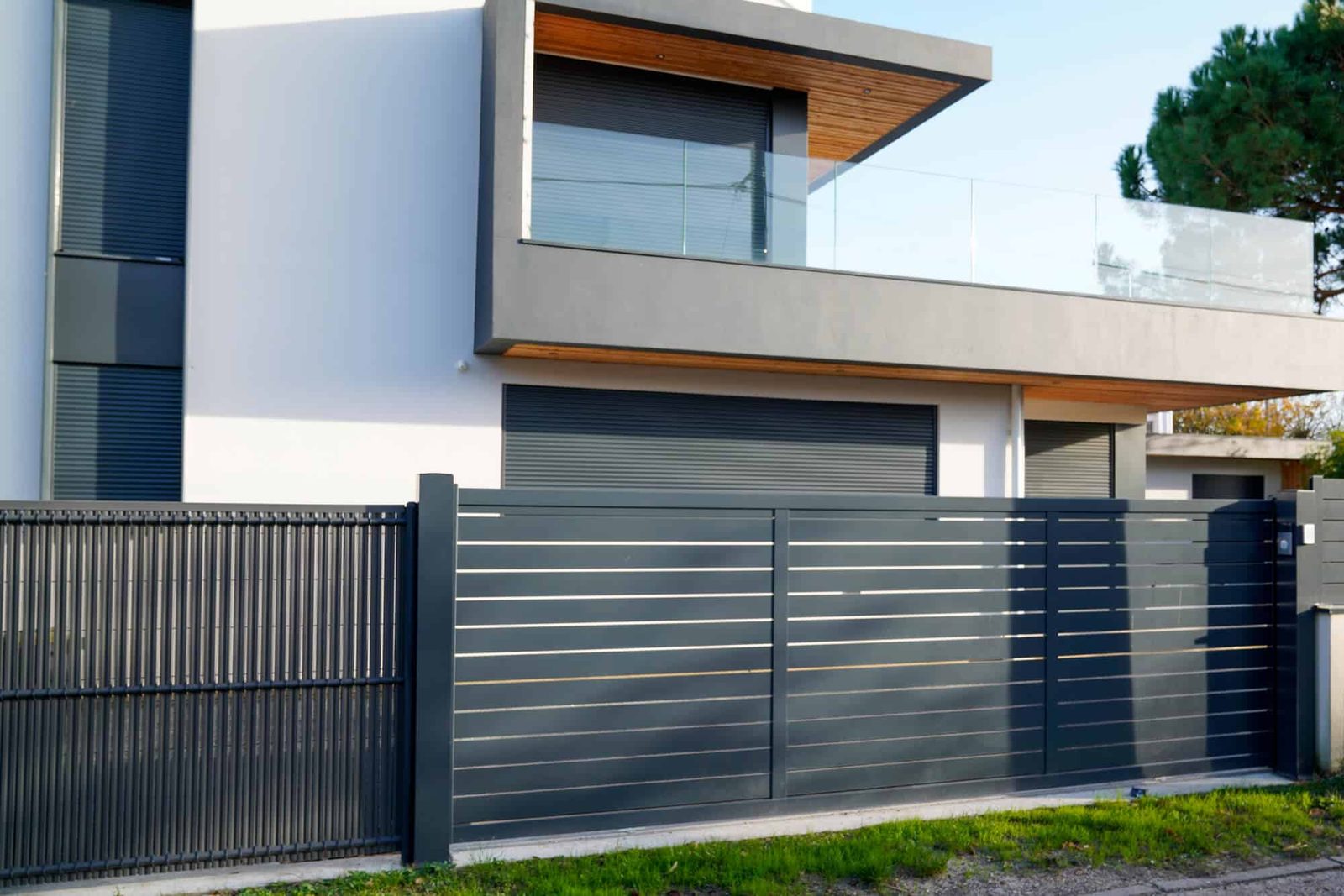
Panels come in different heights, and gates can be swing or sliding, manual or automatic. Decorative caps, finials, and brick or stone columns are easy to add.
Other Practical Benefits
- Slim profile. Metal panels take up little space, which helps on narrow lots and along walkways.
- Pool-friendly. Open metal styles give a clear line of sight to the water and can be built to a height and spacing that suits pool safety rules. Check local pool barrier requirements before you design one.
- Repairs by section.