In This Guide
- Solid, lattice, and retractable covers each solve a different problem, so the right pick depends on how your customers use the space.
- A cover makes an outdoor area usable through Louisiana sun and rain, and lighting can stretch that use into the evening.
- Compare bids only when each one covers the same size, materials, and finish, and ask about wind guidance for storm season.
- Routine cleaning and a quick look at fasteners and moving parts keep a cover working and looking good for years.
A patio cover turns a hot, wet, or glary stretch of outdoor space into somewhere people actually want to sit. For a New Orleans business, that might be a restaurant patio that stays open through a summer shower or a courtyard where staff can eat lunch out of the sun. This guide covers the main types of covers, what they add, and what installation and upkeep involve.
Here is how the team at Big Easy Fence would walk a business owner through choosing a commercial patio cover, starting with the three designs you will see most often.
Three Types of Commercial Patio Covers
Most covers fall into one of three groups. Each one balances shade, rain protection, and airflow a little differently, and the trade-offs matter more than the look. If you want to compare materials as well, our post on choosing the right material for a commercial patio cover goes deeper.
Solid Covers
A solid cover has a closed roof, so it blocks nearly all sun and keeps rain off the seating area. That makes it the steadiest choice for a space that has to stay open in any weather. The trade-off is airflow. Without open sides or fans, a fully covered patio can feel close on a still, humid afternoon.
Lattice Covers
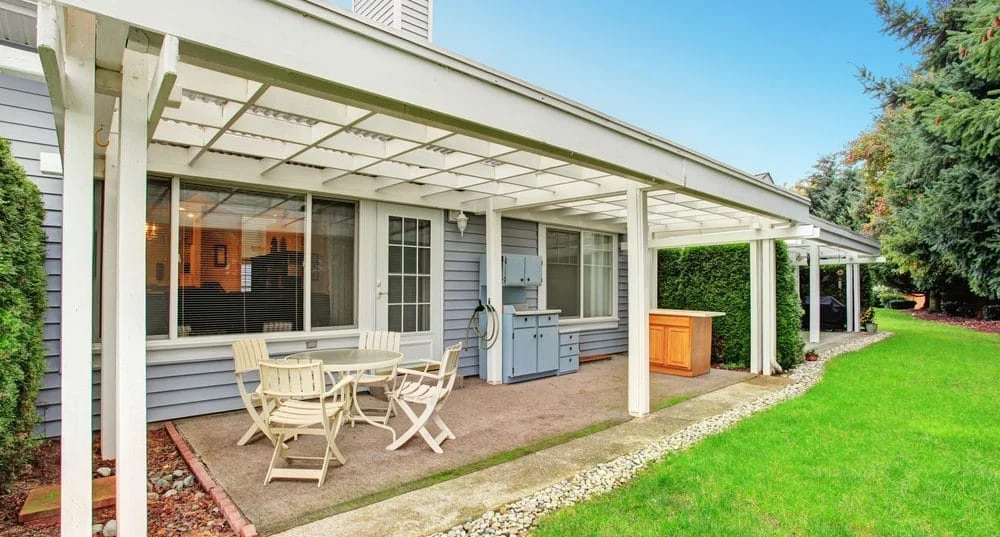
A lattice cover has evenly spaced gaps in the roof. It filters the sun instead of blocking it, which gives a patio dappled shade and lets warm air rise and escape. Lattice suits courtyards and entryways where you want light and breeze. It does little against rain, so plan on furniture that can get wet.
Retractable Covers
A retractable cover opens and closes as the weather changes. On a mild evening it stays open. During a downpour or a harsh afternoon it closes. Motorized versions make that a button press. Because they have moving parts, they need more routine care than a fixed roof.
| Cover Type | Shade and Rain | Airflow | Best For |
|---|---|---|---|
| Solid | Full shade and full rain cover | Limited unless the sides are open | Dining areas that must stay open in any weather |
| Lattice | Partial shade, little rain protection | Good | Courtyards, entries, and casual seating |
| Retractable | Adjustable, full cover when closed | Good when open | Spaces that switch between sun and shelter |
What a Patio Cover Adds to a Business
The benefits show up in three places: how often the space gets used, how comfortable it feels, and how the property looks from the street. For more on the design side, see how commercial patio covers enhance outdoor spaces.
A Space Customers Can Use More Often
An uncovered patio is out of play on a rainy day or under a hot afternoon sun. A covered one is not. For a restaurant, cafe, or event space, that means more hours when the outdoor seating is available. For an office or retail center, it means a spot where people can wait, meet, or take a break.
Comfort in Louisiana Heat and Rain
Shade takes a real edge off a summer afternoon, and a roof keeps the pop-up showers from clearing the tables. Pair a cover with fans and you improve the comfort further. Comfort keeps people in the space longer, and staff notice it too.
Curb Appeal and Lighting
A cover can be styled to match the building, from a simple painted frame to a more detailed design. Integrated lighting extends the space into the evening and gives the entrance a finished look after dark. Ask your contractor to plan the wiring during design so the fixtures sit where you want them.
What Drives the Cost of a Patio Cover
No honest price applies to every project, so this post does not quote one. Cost depends on the size of the covered area, the type of cover, the materials, the finish, and how much site work the job needs. A solid roof generally involves more framing and roofing material than an open lattice. A motorized system adds mechanical parts and controls. Lighting and fans add their own line items.