In This Guide
- A covered patio earns money when more of its seats are usable in more kinds of weather and at more hours of the day.
- Layout, shade, and lighting decide whether guests choose the patio, stay longer, and come back for dinner as well as lunch.
- A cover that fails mid-season costs you tables and repair money, so structure and storm readiness protect your revenue.
- Track your own patio numbers before and after the cover goes in, since no outside statistic can tell you what your restaurant will earn.
For a restaurant, patio seating is either working or it is empty. A covered patio moves it toward working. The difference shows up on rainy afternoons, in the hot part of the day, and in the last hour before closing.
This is a practical plan for restaurant owners who want their outdoor space to earn more. It covers the choices that matter most: layout, shade, lighting, durability, and how to measure results. Big Easy Fence builds commercial patio covers for restaurants and other businesses in the New Orleans area, and the same principles apply whatever your menu.
Start With the Seats You Can Actually Use
Revenue on a patio comes down to how many guests you can seat comfortably, and how often. Before you choose a cover, look at the space the way a server does.
Measure and Map the Space
Measure the patio and note its shape. A square or rectangular area suits a straightforward layout of evenly spaced tables. An irregular area might need a custom cover, and a good design can turn an awkward corner into the most popular table on the patio.
Plan the Service Paths
Servers need clear routes from the kitchen door to every table. Sketch the cover and its posts over a floor plan so you can see where support columns will land and adjust before anything is built.
Decide What Else Belongs There
A host stand, a service station, or an outdoor bar can change how the space flows. If you plan a grill or prep area, look at how it would sit beside a cover, and see what an outdoor kitchen would add to your menu options.
Shade That Stretches Your Service Hours
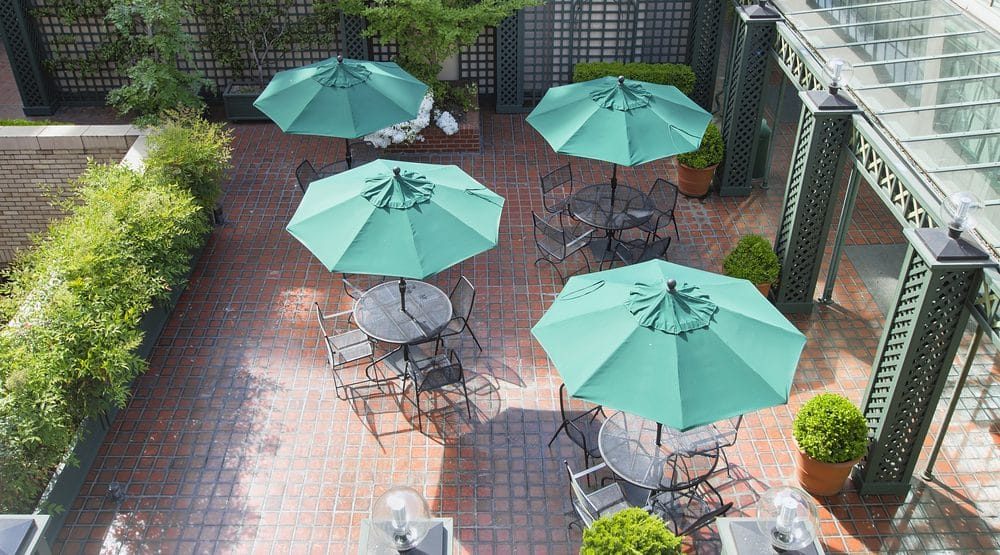
In a Gulf Coast summer, shade is what separates a patio people ask for from one they avoid. A cover that blocks direct sun makes the space usable during the hottest stretch of the day, so lunch service can run outdoors and your staff can work there comfortably too.
The best covers balance shade and light. Adjustable louvers let you angle the roof to match the time of day, so brunch can have gentle morning light and a late afternoon can stay cooler. Retractable systems go a step further, and our post on all-season dining with retractable covers explains how they handle rain and heat.
Lighting for Dinner Service
The cover is also the place to hang light. String lights, lanterns, and recessed fixtures turn a shaded lunch space into an evening room, which is often the difference between a patio that closes at sundown and one that stays full through dinner.
- LED lighting. It uses less energy than older bulbs and lasts longer, so it costs less to run through a long evening.
- Warm color temperature. Soft, warm light flatters food and faces, and it keeps the mood relaxed.
- Dimmers. Let staff lower the light as the night goes on.
- Solar accents. Small solar lights along paths and steps add safety without extra wiring.
Match the Cover to Your Concept
The right cover depends on how you serve. A cover that works for a quick lunch counter is not the one a tasting-menu restaurant needs.
Casual and Counter Service
Durable materials and easy-to-clean surfaces matter most here, along with enough shade for fast turnover at midday.
Full-Service Dining
Guests linger, so comfort and atmosphere carry the most weight. Think solid roofing for rainy nights, quiet lighting, and fans that keep air moving without blowing out candles.
Bars and Live Music
Louder, busier spaces benefit from a taller cover and more open sides, so heat and noise have somewhere to go. Check where stage and speakers will sit before finalizing posts.
Build for Storm Season
A patio that closes for repairs earns nothing. New Orleans brings heavy rain, strong wind, and a long hurricane season, and a cover has to survive all of it. Cheap, trend-driven structures are the ones that fail first, and a failure in the middle of the season costs you tables at the busiest possible time.
Ask how the cover is anchored, what wind loads it is designed for, and what finishes protect it from rust and moisture. Spending more on the structure often costs less than replacing it.
Measure Whether It Works
No article can tell you what a cover will earn at your restaurant, and any promised percentage should make you cautious. You can find out for yourself with simple records. Start tracking before the cover is installed so you have a baseline.
- Log the weather. Note days when the patio closed early or never opened because of rain or heat.
- Count patio guests. Track how many guests you serve outdoors by shift.
- Watch evening use. Note how many tables are seated after dark.
- Collect feedback. Ask servers and regulars what they notice.
- Compare seasons. Set the same month across two years and look at the patio numbers.
Making the Investment
The covered patios that pay off are the ones designed around real service: good layout, comfortable shade, warm lighting, and a structure that stands up to the weather. If you are ready to look at what that would take for your restaurant, Big Easy Fence can put together a free estimate.
Planning a Patio for Your Restaurant?
Give us your dimensions and your service style. We will suggest a cover that keeps tables filled in all kinds of weather.